EDF Casting and Early Treatment

What to expect on the first day of Early Treatment. Plus diapering and bathing tips from other parents.

Firs
t, take heart in knowing that what we hear across the boards from Moms and Dads of babies and young children who get Early Treatment, EDF casting in the Mehta Method, is that the kids are incredibly resilient. Much more so than us adults, sometimes!

The time period before the first casting date is often one of anxiety and worry about the unknown. We hope it helps to know that many parents and children have gone through this experience before you, and we know how you feel.

Please join the C.A.S.T. support group if you wish to, and we will be there for you, answer your questions and support you through the process.

YOU CAN DO THIS!

That said, the first casting day can be emotional, especially for the parents. It can be a long, difficult day for the family, but if your child can potentially be cured of Progressive Infantile Scoliosis(PIS), or even postpone spinal surgery to buy precious growing time, it is worth every moment.

Some things you may want to bring:

-Distractions. A few favorite toys, books, a blanket, and a portable DVD player, if you allow children’s videos. These things from home can provide a lot of comfort.

-Some favorite snacks, for when the nurses say it’s okay to eat solids. Some parents may allow a special treat that day, and many hospitals will have yogurt, jello, ice cream, or pudding. Again, it’s a nice distraction from the new experience of being in the cast. If your child loves a certain snack, you may also want to bring it that day.

-Water resistant bibs, to avoid splashes and spills on the cast, or crumbs down the cast. There are brands like Bumkins at Babies R Us that also have a pocket to catch spills.

-Some parents like to use Calendula baby cream for minor skin irritations from the cast rubbing on the child’s skin. Dr. Mehta recommends Calendula cream, as it is natural, gentle and healing. Some parents prefer Aquaphor, depending on what your child’s skin responds best to.  Please apply a small amount to childs skin for allergy testing, first.

-Duct tape. Many parents use it to semi-waterproof the bottom edge of the plaster cast, to avoid pee leaks that could “wick up”, or be absorbed into the plaster. You can do this the first or second night, it may be too much to add in on the first day. Just cut 2-4 inch strips of the tape and do your best to seal the bottom edge, tucking a bit under it, if possible.


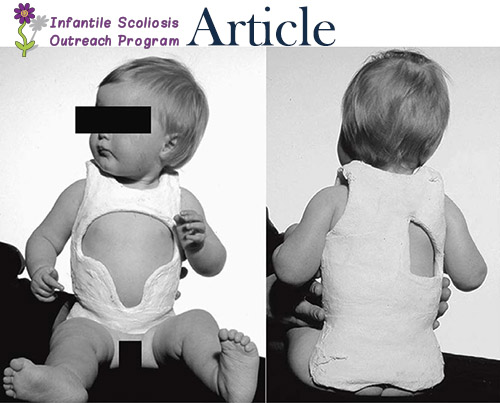
Every child is unique and every hospital is different, but when your child wakes up from anesthesia, they may be cranky/crying/scared and upset. This is normal. You can imagine that this new thing they are wearing can be a shock and feel heavy at first, but it is not painful.

The three dimensional, pediatric sized (EDF) casting table that allows for the best possible correction for your child’s curve may cause some sore muscles in the first 48 hours or so. A properly applied EDF cast should never be painful.

Many children benefit from infant or children’s Tylenol and/or Motrin on the first and maybe the second day. Of course, always follow hospital policies and have the doctor or nurse approve and provide the medicine.

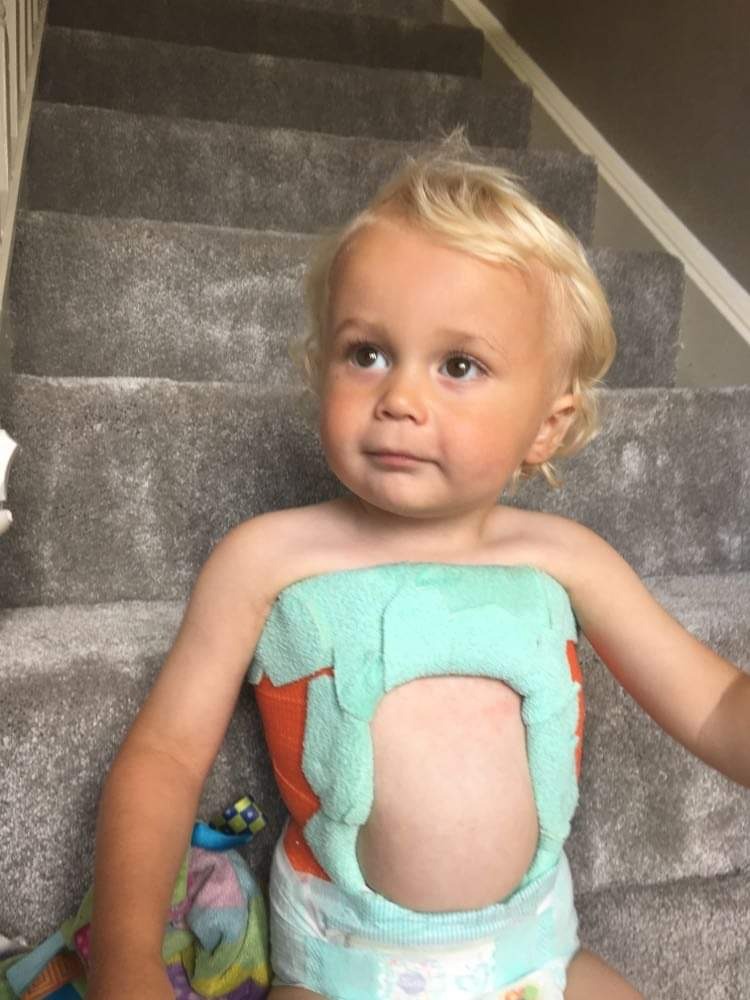
Most casts will have the rough edges covered with white medical tape called moleskin. It is soft on one side and sticky on the other. The nurse(s) may help you to apply it on the casting day, or they may do it themselves. They will probably show you how to do it and give you some extra to take home. The process of applying it is sometimes called “petaling”.

Cast adjustment: If the cast is painful or very uncomfortable in an area, such as the hips or near the tailbone, you should definitely check with your doctor, who may then trim or adjust it.   Please make sure all trimming is done prior to hospital discharge.

It is normal for a cast to be snug or “anchored” at the hips, but again, not painful. Each cast is unique, and this is on a case by case basis. Ideally, it is a “work of art” that is protecting and saving the work of art who is your precious child.

It is a good idea to stay close by your child while he or she adjusts to the cast and its weight. Falls can be harder, especially in the beginning, and they have to get used to being “top heavy” if they are old enough to be walking.

As every child is unique, it may take a few weeks or longer to get their full mobility back in the new cast. This is also totally normal.

Things like turning over in the crib, getting stuck on the floor after reaching for a toy, not being able to climb stairs, etc., can be upsetting to the parents, but the children get these skills back and much more in their casts. They can do almost everything, besides swimming or playing in sand. Children in casts play normally, run fast, and experience life with all of the joy your heart can hold!
 
Diapering: Some parents go down a size in diapers and tuck the top edge up under the cast. You will find what works best for you.

Another option is night time style pull-ups instead of regular diapers, or a regular diaper with a Poise pad stuck inside it, like a feminine pad, for extra protection.

Some parents like to put regular pull-ups over the diaper during the day, and at night, use Kushies brand water-resistant training pants from walmart.com over the diaper and Poise pad. Another bit of extra protection is to place 2 panty liners, stuck back to back, tucked up gently under the front/back of the cast at night. There may not be enough space for this in a snug cast, but they sometimes loosen up a bit at the bottom as the child grows.

The Kushies or another brand of a similar style can help "seal off" pee leaks at night.

Hair washing: Some parents wash their child’s hair “spa style”, by laying them on soft towels on the kitchen sink counter and gently leaning the child’s head over the sink, with a rolled up towel to support their neck. Just cover your child with a bib and an extra towel, to avoid splashes on the cast. “Dry” shampoo is another option, you’ll find what works best for you.

Bathing: You can just put a soft towel on the floor or a bed, and do a sponge or washcloth bath with your favorite baby wash and a little lukewarm water. It’s great to make it playful and FUN! Why not tickle a bit and get some giggles out of it?

Diaper leaks: If you get leaks and your child’s cast has an “under sweater”: You can pull the sweater out as best you can, and wash it without getting the cast wet. Cetaphil cleanser and Burts Bees mixed together works well, or your favorite baby wash, rinse as best you can, wring and towel dry, than blow dry it without (obviously) burning the baby's skin.

A cool setting is best. You can also use a towel to protect their legs and/or use a cool setting. Just do your best!

They never end up smelling as bad as you worry they will, if you just do the basics. The first cast is the hardest, so hang in there, it does get better! It’s all worth it in the end, and you know you are doing the absolute best thing for your child.

Feeling emotional is also completely normal, as a parent or guardian of a child with progressive scoliosis. If you need professional help, please seek it, but just know that you are not alone!

A quick additional tip: A lot of parents really like using a beanbag chair for their casted child, especially at first to help prop them up as they adjust. Pillows can work for that, too.

We hope these suggestions and tips help you and your family. Any brand names can usually be substituted for generic store brands.

Of course, always check with your doctor with any questions first, this is simply a list compiled by parents, based on our personal experiences.

The warmest regards to you and your family as you begin this journey. We hope to meet you on the Yahoo C.A.S.T. group!


  2008 Copyright, Infantile Scoliosis Outreach Program